Gate opens but will not close
Misaligned or dirty photo eyes, a faulty safety edge, or drifted limits are the usual causes; the safety circuit is checked first.
Automatic gate repair in Concord, CA covers the whole system — operator, control board, safety circuit, and the gate itself — because a gate that will not move is rarely one failed part in isolation. A motor that hums but does not drive, a gate that opens but will not close, or a gate that reverses at the same spot every time each point to a different fault, and the diagnosis follows a set order: power, control board, motor and drive, safety circuit, travel limits, then mechanical hardware.
Tell us what the gate is doing and where in Concord you are. We serve Concord, CA — ZIP codes 94518, 94519, 94520, and 94521.
Call Now 925-265-8944 → Monday–Sunday, 8:00 AM–8:00 PM. Quote on inspection.On this page
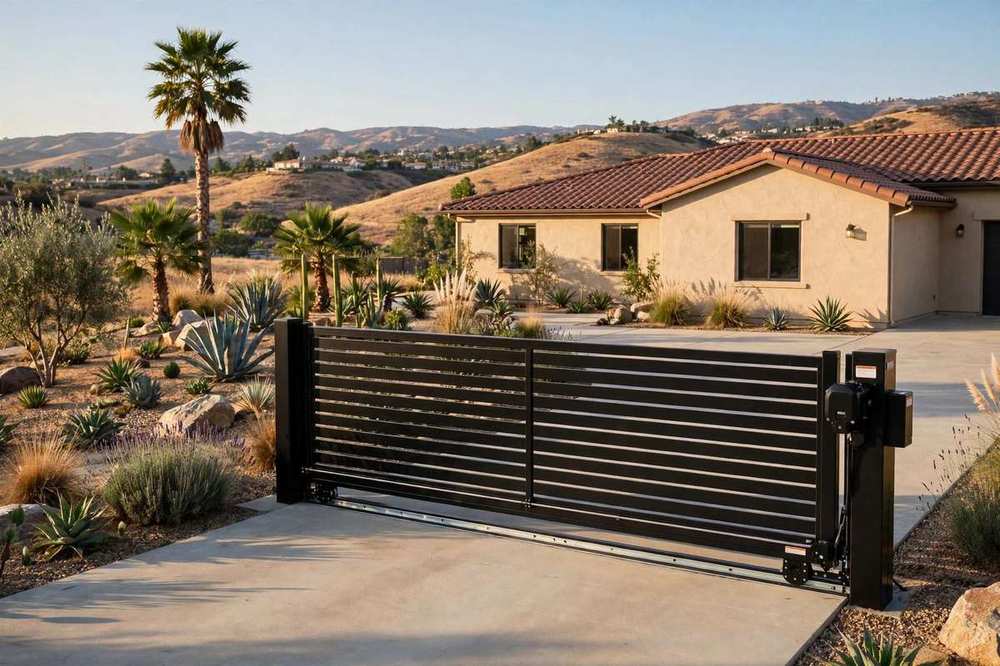
Concord conditions shape these faults. In Concord, gate trouble often starts underground. Local contractors report expansive clay that swells when winter rain soaks it and shrinks as it dries in summer, so posts lean, gates drop out of square, and latches stop lining up. Mature tree roots can heave a post the same way, and on hillside lots near the Diablo foothills a gate that swings uphill drags, binds, and strains its operator. Summer heat warps wood, ages coatings, and stresses opener electronics and batteries, while winter wetness and soil contact drive rust at grade level. That is why a repair here starts by checking the gate moves freely by hand before any electronics are blamed — a bound gate will defeat even a new operator.
For an automated gate, Concord ground moves the mechanics and Concord heat stresses the electronics, and either side can stop the gate. Clay that swells in winter rain and shrinks as it dries in summer pulls posts out of square, so a leaf that once cleared its strike starts dragging and the operator reads the extra resistance as an obstruction. Summer heat strains control boards and batteries, and winter wetness at grade level corrodes hinges, rollers, and track hardware — so an automatic-gate fault here is diagnosed as a system, not as a single part.
Most automatic-gate jobs include the full diagnostic sequence and the repair itself, with the failed part confirmed on site before anything is replaced — a board, a motor, and a bound gate can all produce the same dead gate, and they are very different repairs.
Power, board, motor, safety circuit, limits, and hardware checked in order, so the failed part is found rather than guessed at.
Photo eyes, safety edges, and loops cleaned, aligned, and tested; a gate that opens but will not close is usually a sensor or limit fault, not a dead motor.
Rollers, hinges, and tracks inspected for binding, wear, and drag before the operator is adjusted or replaced.
Failed motors, boards, capacitors, gear sets, and sensors replaced with parts matched to the gate's weight, length, and daily cycle count.
The gate is cycled and its reversing and entrapment-protection functions tested before the visit ends.
Call 925-265-8944 during business hours, Monday through Sunday, 8:00 AM to 8:00 PM, and describe exactly what the gate does: opens but will not close, reverses at the same spot, hums without moving, stops halfway, or shows no lights at all. Those symptoms point the diagnosis toward the safety circuit, the travel limits, the capacitor and drive, or the power supply before anyone travels.
The gate is first moved by hand with the operator released, to prove it rolls or swings freely, then the diagnostic order is followed: power, control board, motor and drive, safety circuit, travel limits, and mechanical hardware. Posts, footings, hinges, rollers, and tracks are inspected alongside the electronics, because a mechanical bind will defeat even a new operator.
Once the fault is found, you get a quote on inspection before work starts. No figures are quoted sight-unseen, because the fix depends on whether the fault is electrical, electronic, or mechanical — and on the gate's weight, length, and daily cycle count.
The repair is completed and the gate is cycled through full travel in both directions, with reversing and entrapment-protection functions tested before the visit ends. A gate left closing on a faulty safety circuit is not left in service.
You are shown what was done and what to watch for — photo-eye alignment, track and hinge debris, battery condition, and any post movement — so a returning symptom can be described precisely on the next call.
Diagnostic equipment matched to an automated system, used so an electrical fault, an electronic fault, and a mechanical bind are told apart before parts are recommended.
Used to test supply voltage at the transformer, the control board, the motor, and the safety sensors, separating a power or board fault from a motor or mechanical fault.
Used to check post plumb, gate squareness, and travel geometry after repair, since an out-of-square leaf will keep tripping limits and safety devices.
Used for operator, hinge, roller, track, and hardware adjustment and replacement, including limit and safety-device refitting, without stripping fixings.
Winter-saturated clay swells and summer-dry clay shrinks, and on an automated gate that movement shows up as drag, limit drift, and false obstruction reversals — the operator is often blamed for a post that has moved.
What a technician checks first: whether the gate moves freely by hand with the operator released. If it binds by hand, the fault is mechanical — post, hinge, roller, or track — and no board or motor swap will fix it; if it moves freely, the diagnosis moves to power, board, and safety circuit.
Summer heat stresses control boards and batteries and ages the coatings that protect metal at grade level, while winter wetness and soil contact drive rust on hinges, rollers, and track hardware — the two seasons attack opposite ends of the same system.
Repaired versus replaced depends on what failed and what it sits in: a single failed capacitor, sensor, or board on a sound, freely moving gate is a repair, while an operator that is old, undersized for the gate, built from discontinued parts, or lacking modern entrapment protection points toward replacement.
Hillside lots near the Diablo foothills make swing leaves drag uphill and strain operators, and gates used many times a day wear gear sets, chains, and limit switches faster than a light single-family gate — cycle count, not just age, decides which parts fail first.
A common misdiagnosis to avoid: a gate that opens but will not close is usually a sensor or limit fault, not a dead motor, and safety sensors must never be taped over or disconnected to force a gate closed.
Safety note for automated gates: current UL 325 practice calls for two independent means of entrapment protection for each entrapment zone, in each direction of travel, and the two means must be of different types — for example inherent force sensing plus photo eyes or a safety edge. If a monitored sensor faults or is disconnected, the operator should not run. Safety sensors must never be taped over, bypassed, or disconnected to force a gate closed, and controls should sit where a person using them cannot contact the moving gate.
Call 925-265-8944 →Misaligned or dirty photo eyes, a faulty safety edge, or drifted limits are the usual causes; the safety circuit is checked first.
A failed capacitor, a seized gearbox, a bound gate, or a manual release left disengaged — each tested in turn.
Limit drift, track or hinge resistance, debris, or a failing capacitor can all stop travel partway.
Breaker, transformer, surge-damaged board or fuse, and battery condition are checked before any part is condemned.
No licence number, warranty terms, or firm prices are published on this site, because none have been verified for this business. What you get is an on-site inspection, a quote on inspection, and a safety test after the repair. Hours: Monday–Sunday, 8:00 AM–8:00 PM. Address: 2727 Clayton Rd, Concord, CA 94519, United States. See what customers say on Yelp and Google Maps.
Describe what your gate is doing and where in Concord you are, and we will arrange a visit during business hours. Call 925-265-8944, Monday through Sunday, 8:00 AM to 8:00 PM. You can also read customer comments on Yelp and Google Maps — no review quotes are published here.
The most common cause is the safety circuit: blocked, dirty, or misaligned photo eyes, a faulty safety edge, or a loop fault will hold a gate open. Limits that have drifted and a gate binding on its hinges or track can cause the same symptom. Diagnosis on site separates a sensor fault from a board or motor fault.
Expansive clay moves posts out of square, summer heat warps wood and stresses electronics and batteries, hillside slope drags swing gates and strains operators, and shared gates wear faster from high daily cycles. Winter wetness and soil contact drive rust at grade level.
Every job starts with an on-site inspection and a quote on inspection — no figures are quoted sight-unseen, because the right fix depends on the gate, the post footings, and the operator. Call 925-265-8944 during business hours, Monday through Sunday, 8:00 AM to 8:00 PM, to arrange a visit.
Safety note for automated gates: current UL 325 practice calls for two independent means of entrapment protection for each entrapment zone, in each direction of travel, and the two means must be of different types — for example inherent force sensing plus photo eyes or a safety edge. If a monitored sensor faults or is disconnected, the operator should not run. Safety sensors must never be taped over, bypassed, or disconnected to force a gate closed, and controls should sit where a person using them cannot contact the moving gate.
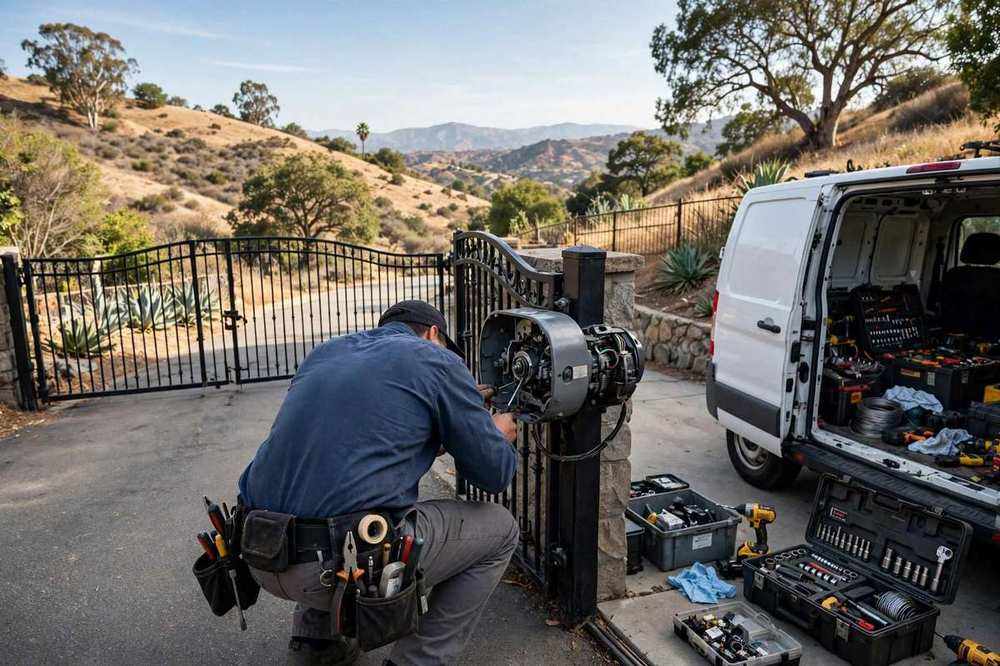 Gate Opener RepairGate opener repair in Concord, CA deals with the operator itself: the motor, gearbox, drive chain or arm, control board, limits, and receiver. Openers are sized by gate weight, gate length, and daily cycle count, so a buExplore →
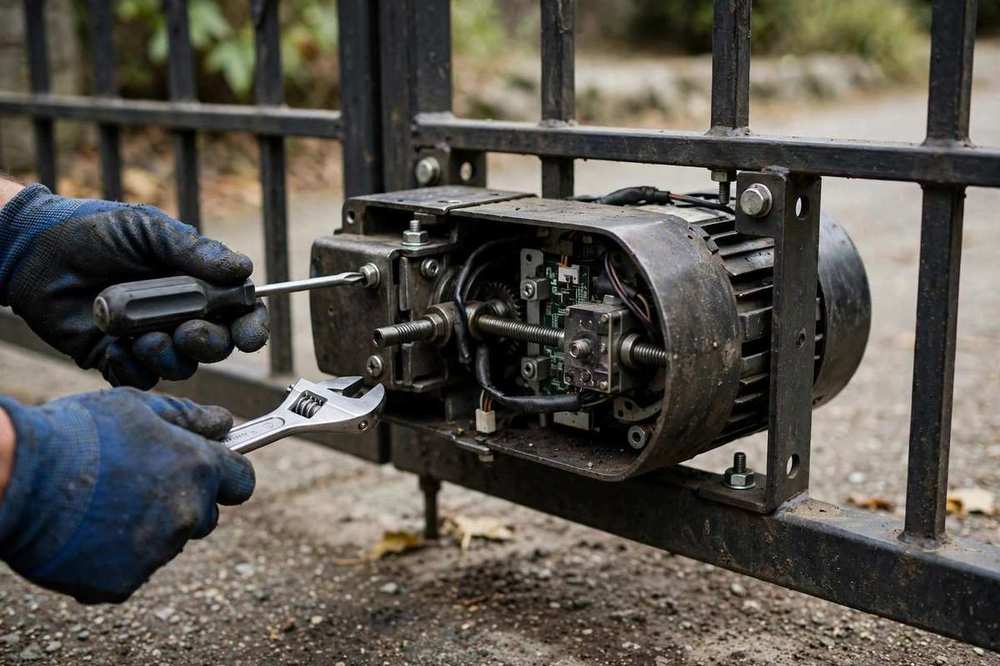 Gate Motor RepairGate motor repair in Concord, CA separates a motor fault from everything around it: a motor that hums, stalls, or runs weakly may have a failed capacitor or gearbox, or it may be a sound motor fighting a bound gate, a moExplore →
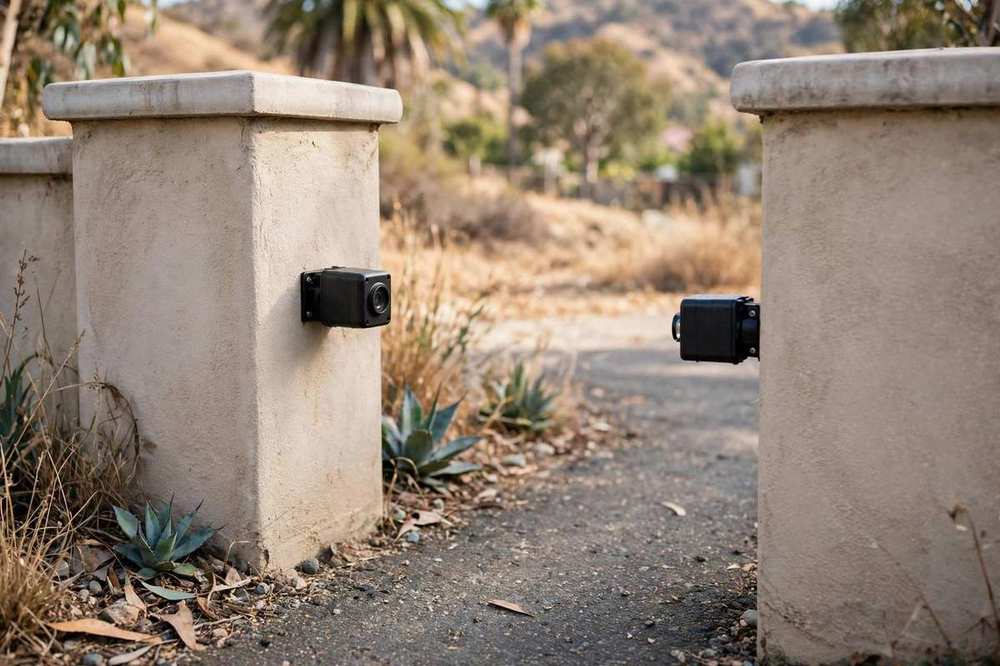 Gate Sensor RepairGate sensor repair in Concord, CA covers the devices that keep an automated gate from closing on a person, pet, or vehicle: photo eyes, safety edges, vehicle loops, and force sensing. A gate that opens but will not closeExplore →
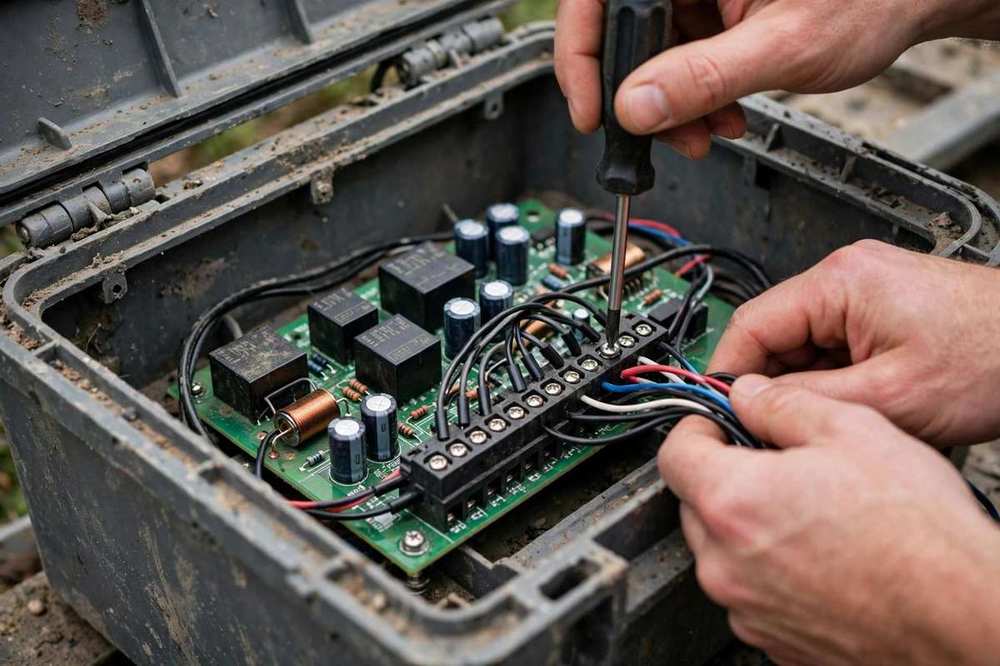 Gate Control Board RepairGate control board repair in Concord, CA deals with the gate's brain: the board that reads remotes, keypads, sensors, and limits and drives the motor. Boards fail after power surges and outages, lose travel settings, or Explore →Sliding Gate RepairSliding gate repair in Concord, CA is distinct work: track alignment, debris and rust, rollers and wheels, V-track condition, drive chain, and limit drift. Sliding gates suit sloped, tight, wide, or high-traffic entranceExplore →
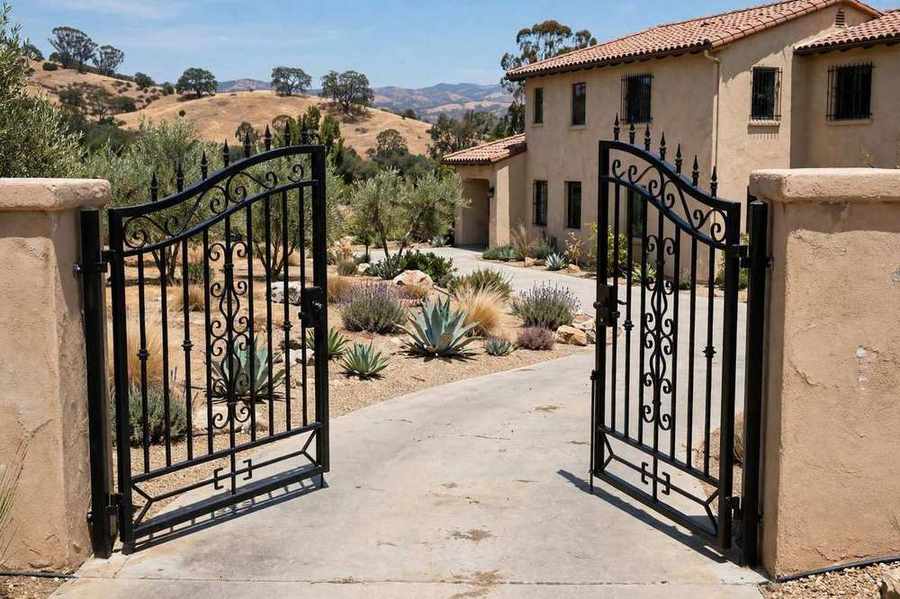 Swing Gate RepairSwing gate repair in Concord, CA covers single and double-leaf gates, including linear ram, articulated arm, and underground operators where fitted. The recurring work is sagging and dragging leaves, worn or bent hinges,Explore →
Call Grand Gate Repair of Concord Company at 925-265-8944, Monday through Sunday, 8:00 AM to 8:00 PM, for automatic gate repair in Concord, CA. You will get an on-site inspection and a quote on inspection.
Call Now 925-265-8944 →Call us at 925-265-8944 during business hours to arrange a visit. Tell us the gate type and what it is doing, and we will come prepared to diagnose it. See our Concord service area and our contact page for full details.