Gate sensor keeps beeping: troubleshooting safety sensors
Beeping is the operator telling you its safety circuit is unhappy. Clean, align, and clear first, and never bypass a sensor to silence it.
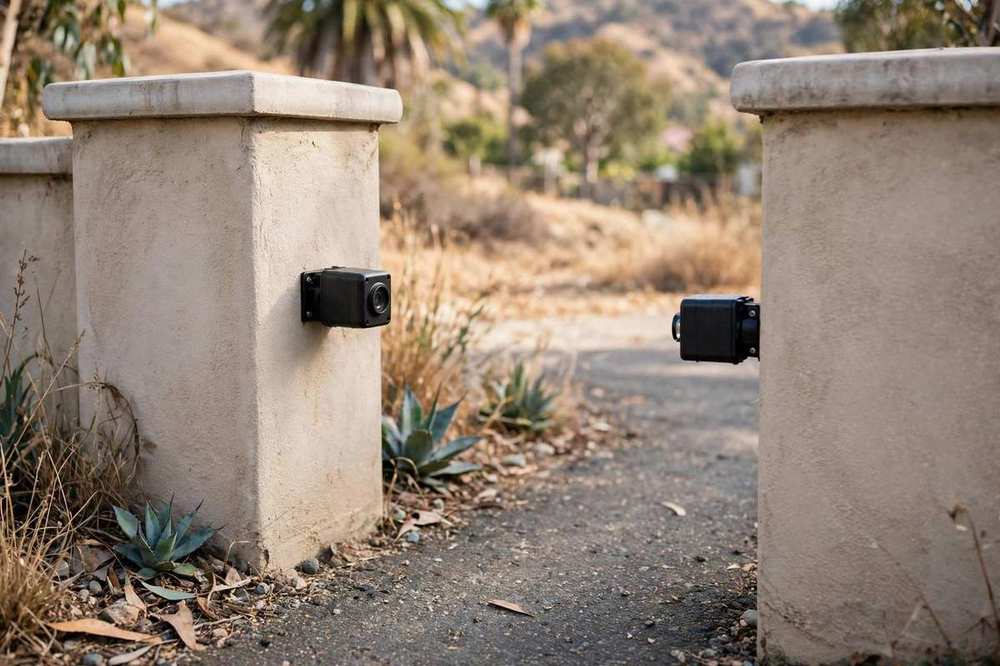
When a gate sensor beeps, the operator is reporting a fault in its entrapment protection, not asking you to ignore it. The usual causes are simple: a dirty or fogged lens, a sensor knocked out of alignment, something blocking the beam, water in a housing, or a sensor that has finally failed. Work through them in that order, and keep the safety circuit intact throughout.
What the beep usually means
Photoelectric sensors, often called photo eyes, send a beam across the gate opening. If the beam is interrupted, the operator stops or reverses a closing gate. A continuous or repeating beep often means the beam cannot be established at all: a lens is dirty, a sensor is misaligned, wiring is damaged, or the sensor has failed. Safety edges, the pressure-sensitive strips on a gate edge, beep or fault when they are damaged, pinched, or waterlogged. Vehicle loops buried in the driveway fault differently, usually by holding the gate open or failing to detect a car, and those are covered under gate sensor repair.
Safe checks you can do
Clean both lenses with a soft, dry cloth. Concord dust, cobwebs, and rain splash are the most common culprits, and a lens that looks clean from above can be filmed over at beam height.
Check alignment. Both sensors should face each other squarely and sit at the same height. Look for a steady indicator light on each unit once they are aligned.
Clear the beam path. Plants, bins, hoses, and even a low-hanging branch can break the beam, and the fault will return until the obstruction is moved.
Check for water. After rain, look for condensation or standing water in a sensor housing and for nicked wiring at the post. Dry housings gently; do not probe live wiring.
Power-cycle only as the manual directs. A brief power cycle can clear a transient fault, but a beep that returns immediately is a real fault, not a glitch.
What never to do
Never tape over a photo eye, disconnect a sensor, or jumper a safety circuit to silence the beep. UL 325-compliant operators use monitored entrapment protection, and on modern operators a disconnected monitored sensor will usually prevent the gate from running at all. Bypassing also removes the protection that stops a closing gate on a person, pet, or vehicle. If cleaning and alignment do not clear the fault, or if wiring is damaged, the sensor or its wiring needs replacement and testing, which is the work on our automatic gate repair page. See also our Concord service areas if you are unsure whether your street is covered.
If the checks above do not fix it, or if anything looks bent, cracked, or unsafe, stop and call Grand Gate Repair of Concord Company at +1 925-265-8944. We are open 8:00 AM–8:00 PM daily, Monday through Sunday, at 2727 Clayton Rd, Concord, CA 94519. Tell us what the gate is doing and what opener it has, and we will talk through the next step for gate safety sensor repair in Concord.
Sources and further reading
General references for the local rules, codes, and safety standards mentioned above.