How to lubricate and adjust a driveway gate hinge
Most hinge noise and sag starts with dry metal and a post that has moved a little. Here is the safe way to service a hinge, and how to tell when it needs more than oil.
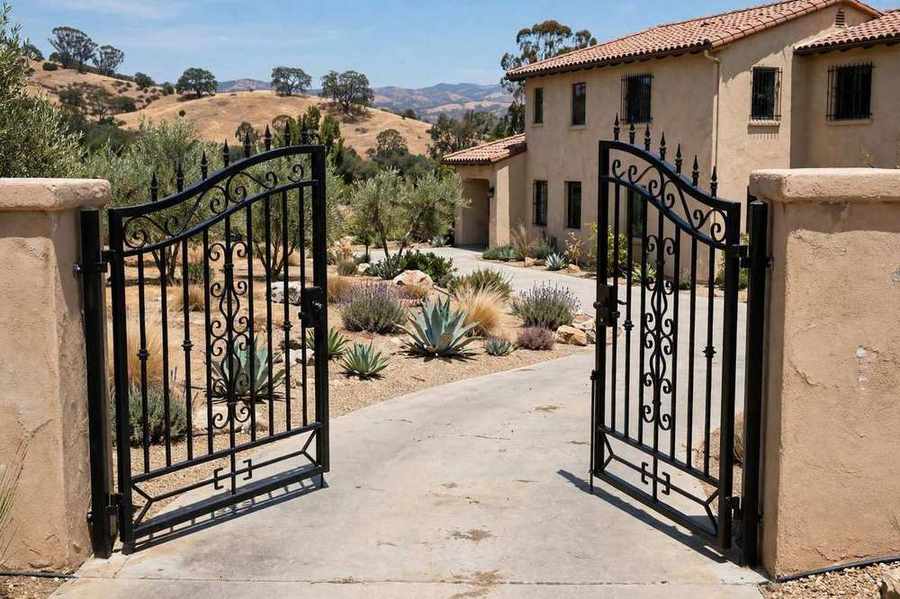
A driveway gate hinge does two jobs at once: it carries the full weight of the leaf and it sets the angle the gate swings on. In Concord, both jobs get harder over time. Summer heat dries lubricant out of hinge pins, winter rain works into unsealed joints, and expansive clay moves posts a little each season, so a hinge that was adjusted last year can start to squeak, bind, or let the leaf sag toward the latch post.
Servicing a hinge is a reasonable homeowner job when the hinge, post, and frame are sound. It is not the fix when metal is cracked, a post leans, or the frame has racked. This guide keeps those two cases apart.
What you need, and what to check first
Use a penetrating oil to free a stiff pin, then a proper hinge grease or a lithium-based lubricant for lasting protection. Avoid spraying lubricant over safety sensors, opener arms, or electrical parts, and keep hands clear of pinch points while the gate moves. Before you touch anything, look at the hinge plates for cracks, elongated bolt holes, or rust flaking through the metal, and check whether the post itself is plumb. If the post leans, adjusting the hinge will only chase the symptom. That is gate post repair territory, not a lubrication job.
Lubricate in order
Support the leaf. On a heavy gate, prop or have someone hold the leaf so its weight is off the hinge while you work.
Clean first. Brush grit, rust scale, and old dried grease out of the hinge knuckles. Lubricant on top of grit just makes grinding paste.
Work the lubricant in. Apply penetrating oil to a seized pin, move the gate slowly through its swing, then apply grease to the pin and knuckles and work it through again.
Wipe the excess. Extra lubricant collects dust on Concord's dry summer roads and ends up back in the hinge.
Adjusting a sagging gate at the hinge
Many bolt-on hinges allow a small adjustment: loosening the hinge bolts, lifting or shimming the leaf back to square, and re-tightening in stages while checking the latch gap. Adjust a little at a time and check the swing after each change, because a hinge adjustment also changes how the opener arm loads. If the gate drags on the ground, that is usually hinge wear plus post movement together, and the dragging-gate checks in our gate track repair post and the hinge section of driveway gate repair explain how to tell which is leading. Welded hinges that are cracked, and hinges whose plates have torn away from the post, need welding or replacement rather than adjustment. See gate hinge repair for that work.
How often, and when to call
As a routine, clean and lubricate hinges before the rainy season and again after a dusty summer. Call if the gate still sags after adjustment, if a hinge pin is bent, if the post moves when you push the gate, or if the opener strains or reverses after you have adjusted the leaf. A gate that binds after adjustment is telling you the frame or post, not the hinge, is the problem.
If the checks above do not fix it, or if anything looks bent, cracked, or unsafe, stop and call Grand Gate Repair of Concord Company at +1 925-265-8944. We are open 8:00 AM–8:00 PM daily, Monday through Sunday, at 2727 Clayton Rd, Concord, CA 94519. Tell us what the gate is doing and what opener it has, and we will talk through the next step for driveway gate hinge repair in Concord.
Sources and further reading
General references for the local rules, codes, and safety standards mentioned above.